
Real Estate
Judge deals death blow to Sarasota County’s fight against Live Local Act
By Katherine Langford
Advertisement · Why this ad?
Katherine oversees editorial operations across all six brands. Before joining The Meridan Group, she spent 14 years at the Minneapolis Star Tribune, where she led the metro desk through its digital transformation. She holds a Master's in Journalism from Northwestern's Medill School.
More from Katherine →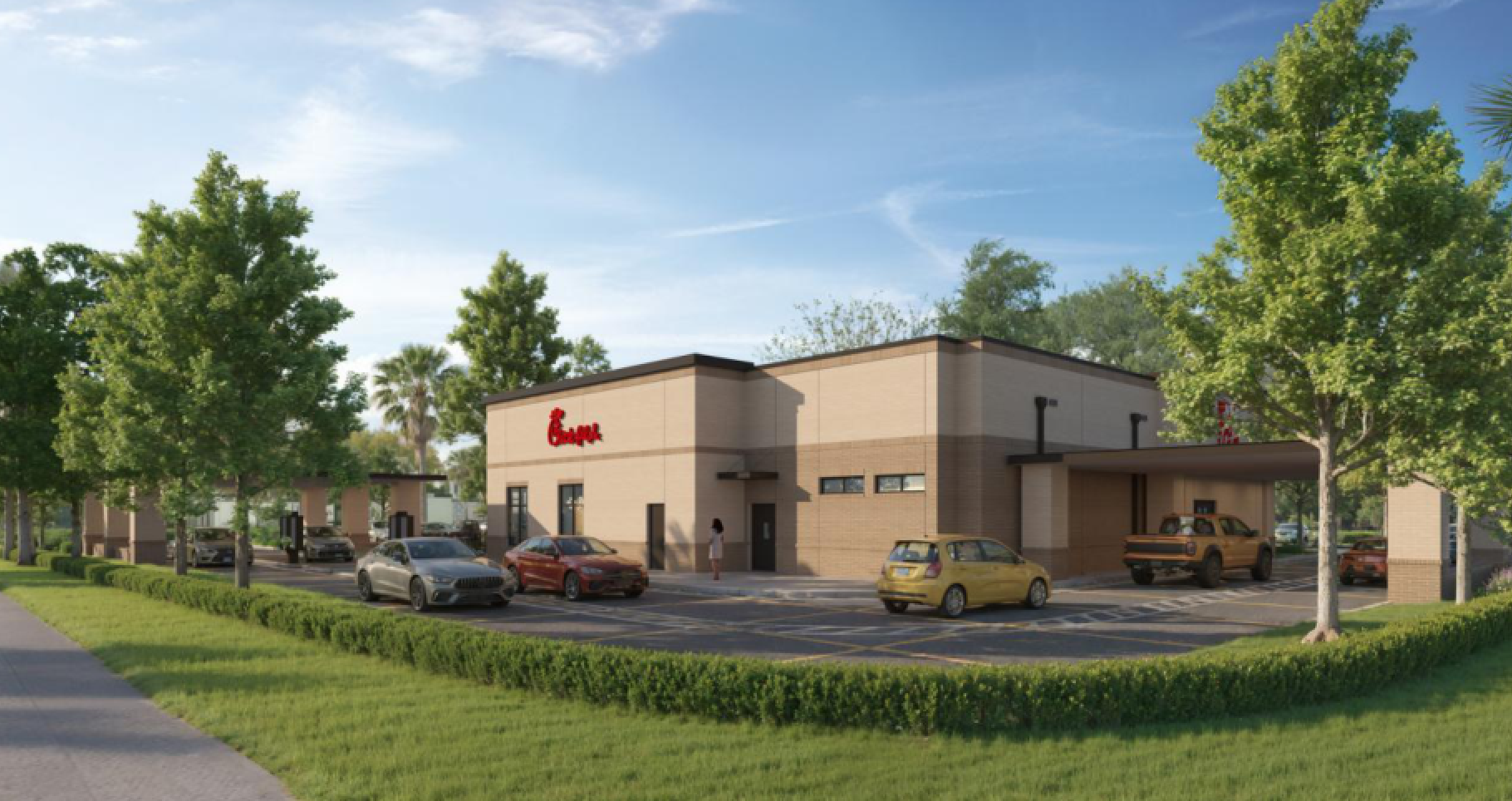
A rendering shows the proposed drive-thru configuration for the Chick-fil-A redevelopment on Fourth Street North. The redesign would provide more room for vehicles to queue on the property, addressing longstanding traffic backups onto 4th Street. Image: City of St. Petersburg. St. Petersburg City Council voted 7-1 Thursday to clear the way for a contested Chick-fil-A redevelopment on 4th Street North, overturning an earlier rejection despite concerns about the residents and small businesses that could be displaced. The Nov. 5 decision approved land-use and zoning changes for a portion of the property at 4201 4th Street N., where the restaurant’s operator wants to rebuild the existing Chick-fil-A on a larger site with expanded parking and drive-thru capacity. Vice Chair Richie Floyd cast the lone dissenting vote. The roughly 1.56-acre redevelopment would combine commercial and residential properties along the east side of Fourth Street, between 42nd and 43rd avenues North. The existing Chick-fil-A occupies the northern portion of the site, near 43rd Avenue. Immediately to its south is the Village Shoppes, a seven-bay commercial strip facing Fourth Street that houses several small businesses, including Fourth Street Tackle and Aquatic Galleria. Behind the shopping center, separated by a 16-foot alley, sits a single-story building containing seven rental apartments. Farther east are single-family homes, while a Hooters restaurant and its parking lot border the property to the south. Under the proposal, the shopping center and apartment building would be demolished to make room for a redesigned restaurant, expanded parking and drive-thru lanes. The existing alley would be relocated eastward, closer to the residential neighborhood. The Community Planning and Preservation Commission rejected the requested changes 4-3 in August , when commissioners raised concerns about losing apartments, displacing established businesses and allowing commercial development to creep farther into the neighborhood. Commissioners questioned whether the benefits of the redevelopment justified losing buildings and businesses that had become part of the 4th Street corridor. Those concerns resurfaced Thursday, but City Council reached a different conclusion. The Chick-fil-A opened in 1999 and has struggled with vehicle backups onto 4th Street. Its operator, David Neely, argues that rebuilding the restaurant would improve traffic circulation, pedestrian safety and the customer experience. Although the restaurant itself would grow by just 202 square feet, the project would roughly double parking capacity and provide substantially more room for drive-thru traffic. Plans also call for removing the driveway along 4th Street, adding sidewalks and landscaping, and constructing a wall along the eastern property boundary to separate the commercial development from neighboring homes. According to materials submitted to council, the restaurant currently employs more than 130 people, with an annual payroll of approximately $2.5 million. The applicant estimates the redevelopment could create another 50 to 75 jobs. But the proposed improvements would require the businesses and apartment tenants occupying the neighboring properties to leave if the redevelopment proceeds. Aquatic Galleria co-owner Anulak Singphiphat told council that relocating his aquarium business would involve moving living animals, established tank systems and specialized equipment. He estimated the move could cost tens of thousands of dollars and potentially force the business to close. “I’m not asking for special treatment, I’m asking that our business and our livelihood and our contribution to this community not be overlooked,” he said. His business partner, Troy Barton, questioned whether the relatively small increase in restaurant space justified the displacement. “St. Petersburg should be a city where new businesses can succeed without sacrificing the small businesses that already make it special,” Barton said. Fourth Street Tackle owner Tom Karakorn, who said he has operated his business at the location for 17 years, also raised concerns about losing the neighborhood’s established businesses. The property was originally developed as the Coral Motel in 1948, according to the applicant’s presentation. The former motel building facing 4th Street was converted into commercial space, while the building behind it now contains seven efficiency-style rental units. During the August hearing, attorney Megan Smith, representing the applicant, said some units were occupied by longer-term tenants, including one person who had temporarily relocated after a hurricane. Rev. Andy Oliver, pastor of Allendale United Methodist Church, told council Thursday that the redevelopment threatened people with limited housing options. “A neighborhood is people and displacing people is an adverse effect,” Oliver said. Supporters emphasized Chick-fil-A’s longstanding presence in St. Petersburg and the potential benefits of reducing traffic backups along the busy commercial corridor. Chris Steinocher, president and CEO of the St. Petersburg Area Chamber of Commerce, urged council to approve the appeal, arguing that the requested zoning changes were consistent with surrounding commercial development. He pointed to the restaurant’s employment opportunities, community involvement and the property owner’s right to pursue redevelopment. His testimony drew pointed criticism from Council member Gina Driscoll, who questioned why the Chamber had not done more to acknowledge the smaller businesses facing displacement. “It’s kind of tough when I hear the head of our chamber talking about one business and not even acknowledging the others,” Driscoll said. Despite those concerns, Driscoll supported the appeal, agreeing with city planning staff that the proposed changes were consistent with the city’s comprehensive plan. Floyd opposed the request, warning that approving commercial expansions one property at a time could gradually erode the character of residential neighborhoods. He compared the proposal to an affordable housing project council rejected in October over similar concerns about development intensity. “We just continually erode the residential character of the neighborhoods,” he said, as each expansion makes the next one easier to justify. Other council members sided with city planning staff, finding the expansion consistent with the commercial corridor along 4th Street. They emphasized that the vote concerned land use and zoning, not final approval of the redevelopment plans. The 7-1 decision overturned the Planning Commission’s earlier rejection, allowing Chick-fil-A to pursue the project through additional city reviews. The applicant’s representative said the development team would help affected residents find alternative housing and work with the aquarium business to identify another location. No specific financial assistance or relocation agreements were outlined during the hearing. Driscoll, who supported the appeal despite criticizing the treatment of neighboring businesses, urged Chick-fil-A and the broader business community to help those affected by the redevelopment. “David’s business is important, but the fish store is important too,” she said. Share Tweet Share Related Topics: 4th Street Chick-fil-a City Council expansion redevelopment St. Petersburg 3 Comments Subscribe to the Daily Spark Get the latest right to your phone Subscription Form Name Email Subscribe Subscribe to the Daily Spark Get the latest right to your phone Subscription Form Name Email Subscribe You may like
By Katherine Langford

By Katherine Langford

By Marcus Chen

By Marcus Chen